If your marketing feels like it's producing traffic and followers but not enough actual customers, there's a good chance the problem lies somewhere in your funnel, not at the very top, and not always at the bottom either.
The marketing funnel is one of the most useful mental models in business because it forces a simple but important question: what happens between someone discovering your business and someone becoming a paying customer? This guide breaks down every stage of the funnel, with practical tactics for small businesses at each step.
What Is a Marketing Funnel?
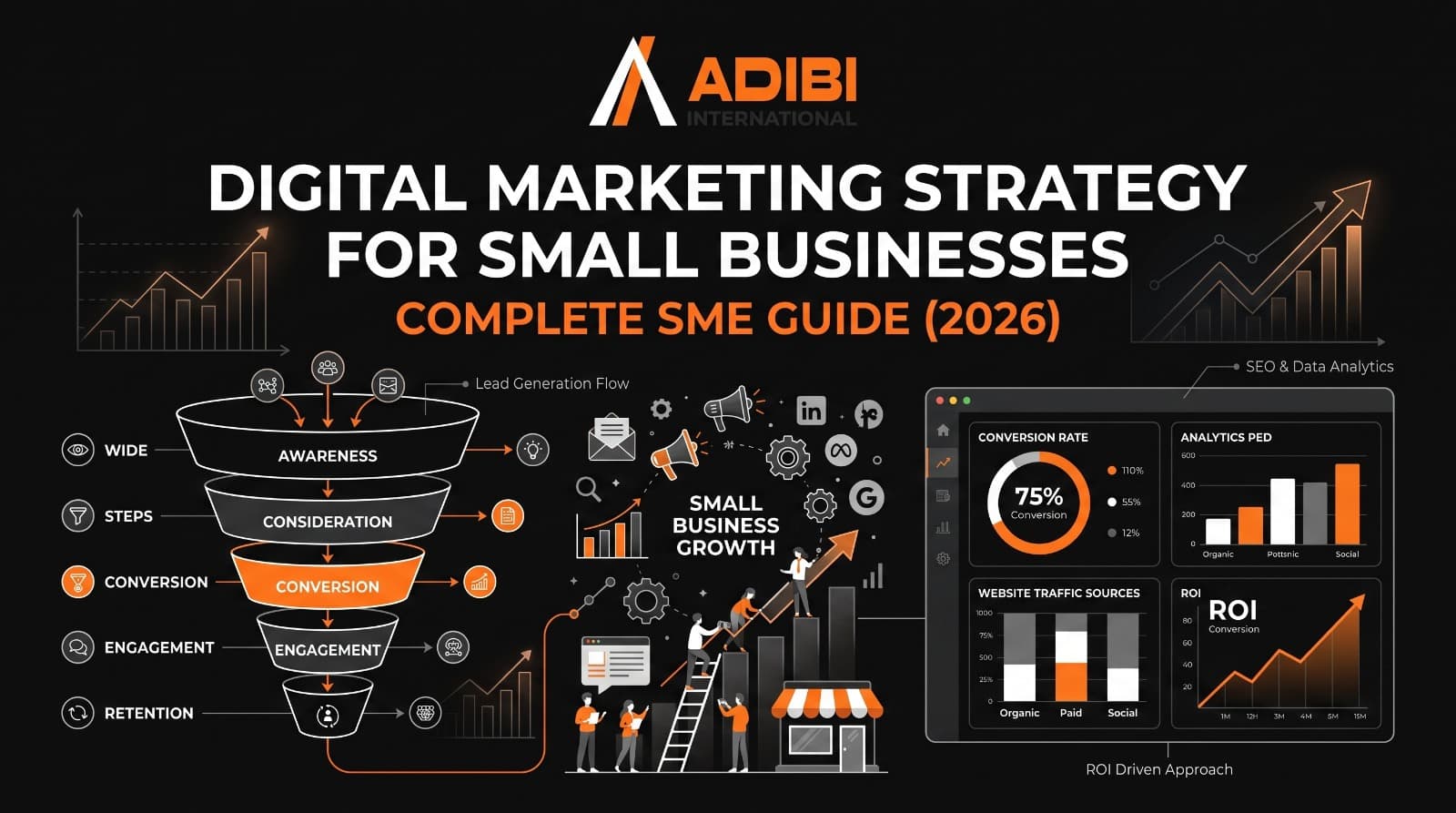
A marketing funnel is a model that represents the customer journey from initial awareness of a business through to purchase and, ideally, repeat business. It's called a funnel because the number of people naturally narrows at each stage. Not everyone who becomes aware of your business will make a purchase, and not everyone who considers buying will follow through.
Understanding your funnel helps identify exactly where potential customers are dropping off, so marketing effort and budget can be directed at the stage that needs it most, rather than spread evenly across a process with a specific weak point.
The Core Stages of the Marketing Funnel
1. Awareness
This is the top of the funnel, where potential customers first discover your business exists. Common channels include social media content, paid advertising, SEO-driven blog content, and word-of-mouth referrals.
At this stage, the goal isn't selling, it's earning attention and making a strong first impression. Educational and entertaining content typically performs better here than direct promotional messaging.
2. Interest and Consideration
Once someone is aware of your business, they begin evaluating whether it's relevant to their needs. This is where comparison content, case studies, and more detailed information about your product or service come into play.
Retargeting ads are particularly effective at this stage, keeping your business visible to people who've shown initial interest but haven't yet decided.
3. Decision
At the decision stage, prospects are actively comparing specific options, including competitors. Clear pricing, strong social proof, guarantees, and direct calls-to-action matter significantly here.
This is also where sales conversations, consultations, or demos typically happen for higher-consideration purchases.
4. Action (Purchase)
The action stage is where a prospect becomes a customer. Friction at this stage, confusing checkout processes, unclear next steps, and slow response times can undo all the work done in earlier stages.
5. Retention and Loyalty
The funnel doesn't end at purchase. Retaining customers through follow-up communication, loyalty offers, and consistent service quality is typically far more cost-effective than acquiring new customers from scratch.
6. Advocacy
Satisfied, loyal customers often become a business's most powerful marketing channel through referrals, reviews, and word of mouth, effectively feeding new prospects back into the awareness stage.

Sales Funnel vs Digital Marketing Funnel
These terms are often used interchangeably, though there's a subtle distinction worth understanding. A sales funnel typically focuses specifically on the path from lead to closed sale, often within a sales team's process. A digital marketing funnel is broader, encompassing the full customer journey across marketing channels, including stages well before a lead is captured.
For most small businesses, thinking of these as connected rather than separate produces better results. Marketing should hand off warm, well-informed leads to sales, rather than the two functioning in isolation.
Mapping Content and Ads to Each Funnel Stage
One of the most common funnel mistakes is using the same messaging at every stage. A prospect who's never heard of your business needs different content than one who's already compared you to competitors.
Awareness stage: broad, educational content, and interest-based paid targeting
Consideration stage: retargeting ads, comparison guides, and case studies
Decision stage: testimonials, clear offers, and direct response advertising
Adeel Talat, founder of Adibi International, often notes that many small businesses run a single type of ad campaign across their entire funnel and then wonder why conversion rates feel inconsistent.The fix is usually matching messaging to the stage, not changing the offer itself.
How Paid Advertising Fits Into the Funnel
Paid advertising, particularly Meta Ads, can be structured to support every funnel stage rather than just the top. Awareness campaigns build initial reach, retargeting campaigns nurture interested prospects, and conversion-focused campaigns target people closest to a decision. Adibi International's Meta advertising services are structured around this full-funnel approach, rather than running a single, undifferentiated campaign type.
A Simple Example: Funnel in Action
Consider a small local landscaping business. At the awareness stage, they run a short Facebook video showing a dramatic garden transformation, targeted at homeowners in their service area. Interested viewers who watch most of the video are then retargeted with a case study post showing before-and-after photos and a client testimonial at the consideration stage.
Prospects who click through to the website see a clear, simple quote request form with transparent pricing ranges, addressing the most common hesitation at the decision stage. Once a job is booked and completed, a follow-up email requests a review and offers a discount on seasonal maintenance covering both retention and advocacy.
Nothing in this example is complicated or expensive. What makes it effective is that each stage has a distinct purpose and a message built for that specific moment in the customer's decision-making process.
Common Marketing Funnel Mistakes
Focusing the marketing budget entirely on the awareness stage while neglecting consideration and decision content.
Using identical messaging across every stage instead of tailoring it to where the prospect is.
Ignoring the retention and advocacy stages after a sale is made.
Not tracking where prospects actually drop off between stages.
Treating the funnel as strictly linear when real customer journeys are often non-linear.
How to Measure Funnel Performance
Track conversion rates between each stage, not just the final sale:
Awareness-to-interest rate: how many people who see your content or ads engage further
Interest-to-lead rate: how many engaged prospects provide contact information
Lead-to-customer rate: how many leads actually convert into paying customers
Customer retention rate: how many customers return or repurchase
Frameworks from HubSpot's funnel marketing resources provide a useful reference point for benchmarking typical stage-to-stage conversion rates.
Final Thoughts
The marketing funnel remains one of the clearest ways to diagnose where a business is losing potential customers. Map your current content and advertising against each stage, identify where the biggest drop-off happens, and focus improvements there before adding more traffic to the top.
If you'd like campaigns built around your full funnel rather than a single stage, Adibi International's Meta advertising services are designed to support prospects from first impression through to purchase.